
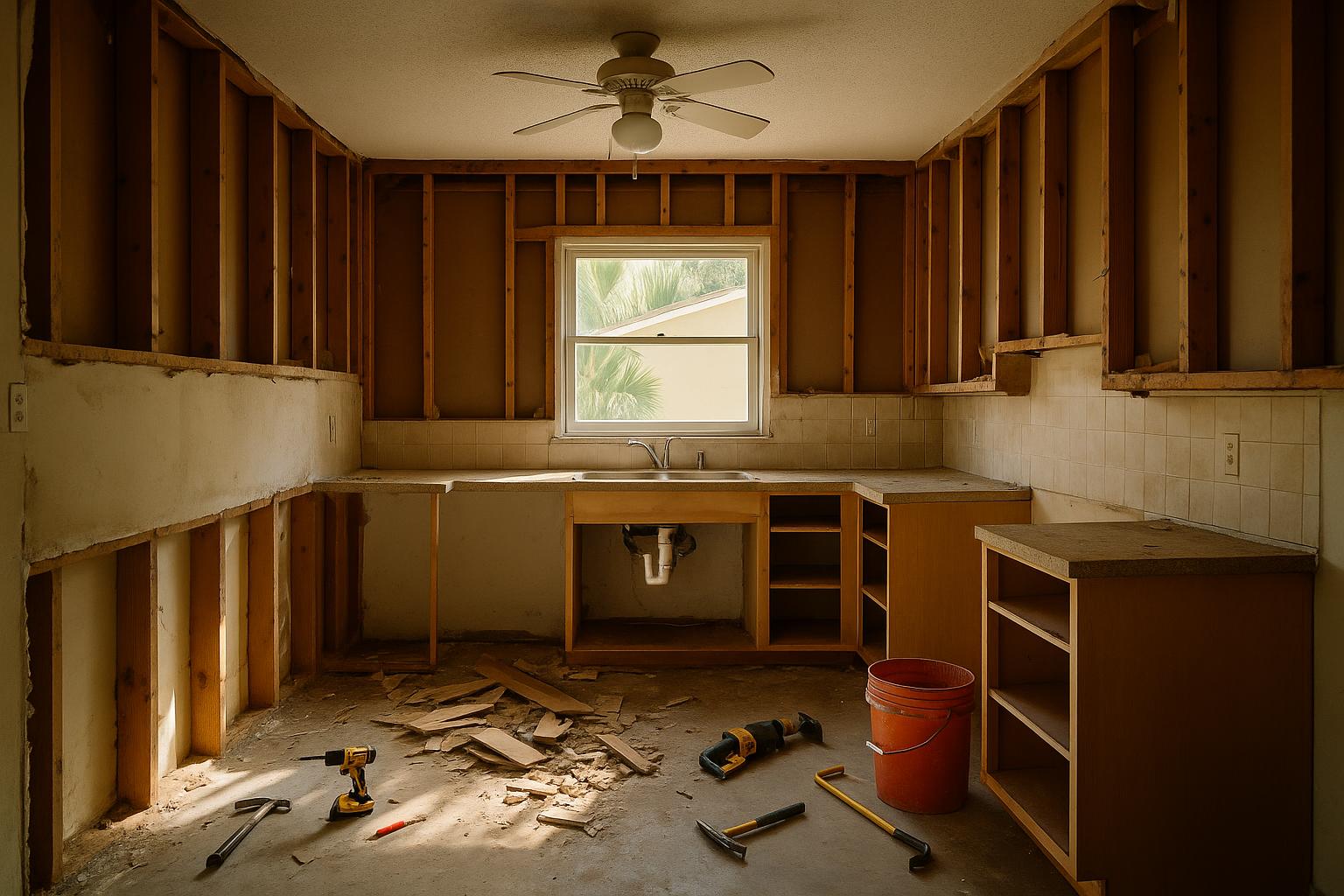
Why Older Kitchens Are a Different Beast
Fort Lauderdale is full of beautiful homes with decades of character — mid-century ranches in Wilton Manors, 1970s builds in Oakland Park, and waterfront properties in Lighthouse Point that haven't been touched since the Clinton administration. These homes have great bones, but their kitchens often tell a different story.
If you're planning to gut your kitchen and start fresh, that's exciting. But older homes come with a unique set of challenges that newer construction simply doesn't. Knowing what to expect before demo day can save you thousands of dollars, weeks of delays, and a whole lot of stress.
Here's what we've learned from years of gutting kitchens in older Fort Lauderdale homes — and what every homeowner should know before swinging the first hammer.
Expect the Unexpected Behind the Walls
This is the number one thing we tell homeowners: you will find surprises. It's not a matter of if — it's a matter of what. Once drywall comes down and cabinets come out, we regularly uncover issues that were invisible during the planning phase.
The most common surprises in older South Florida kitchens include:
- Outdated or undersized electrical wiring — Homes built before the 1980s often have wiring that doesn't meet current code. If your kitchen still runs on a 15-amp circuit, it won't safely support modern appliances.
- Galvanized or corroded plumbing — Older pipes may be rusted, leaking behind walls, or made of materials that are no longer up to code.
- Water damage and mold — In Fort Lauderdale's humid climate, even a small leak can lead to mold growth behind cabinets and inside walls. You may not see it or smell it until demo begins.
- Termite damage — South Florida and termites go hand in hand. Structural framing around windows, exterior walls, and under sinks is especially vulnerable.
- Asbestos in flooring or drywall compound — Homes built before 1980 may contain asbestos in vinyl flooring, adhesive, or joint compound. This requires professional testing and careful removal.
None of these are reasons to abandon your remodel — they're reasons to work with a contractor who knows how to handle them properly.
Budget for a Contingency — Seriously
We know nobody wants to hear "plan to spend more than you think," but a contingency budget isn't pessimism — it's smart planning. For older homes, we recommend setting aside 15 to 20 percent of your total budget for unexpected issues.
In a newer home, 10 percent might be enough. But when you're gutting a kitchen that's 30, 40, or 50 years old, the likelihood of needing electrical upgrades, plumbing rerouting, or structural repairs goes up significantly.
A good contractor will walk you through potential scenarios before work begins so you're not blindsided. If the contingency doesn't get used, great — that's money back in your pocket. But if it does, you'll be glad it was there.
Permits and Code Compliance Aren't Optional
When you gut a kitchen down to the studs, you're almost certainly triggering permit requirements. In Fort Lauderdale, permits are required for electrical work, plumbing changes, and structural modifications. Even moving a wall or adding a new outlet requires proper permitting and inspection.
Some homeowners try to skip this step to save time or money. That's a mistake. Unpermitted work can come back to haunt you when you try to sell your home, file an insurance claim, or pass a property inspection. It can also be a safety hazard.
At Golden General Contractors, we handle the permitting process for every project. It's built into our workflow, not treated as an afterthought.
Your Layout Might Need to Change
Many older kitchens were designed for a different era. They're closed off from the rest of the house, short on counter space, and arranged in ways that don't make sense for how families actually cook and live today.
A gut remodel is the perfect opportunity to rethink the layout entirely. Common changes we make in older Fort Lauderdale kitchens include:
- Opening up a wall between the kitchen and living area
- Relocating the sink to face a window or open space
- Adding an island or peninsula for prep space and seating
- Improving the work triangle between the stove, sink, and refrigerator
- Expanding storage with taller or deeper cabinetry
Layout changes do add complexity — especially when plumbing and electrical need to follow — but the result is a kitchen that actually works for your daily life, not just one that looks better.
Lead Times for Materials Are Real
Once you've committed to a gut remodel, material selection needs to happen early. Custom cabinetry can take four to eight weeks to fabricate. Specialty countertops, imported tile, and certain appliances may have similar lead times.
We always recommend finalizing your material selections before demo begins. This keeps the project moving without awkward pauses where the crew is waiting on a backsplash tile or a range hood that's stuck on a container ship.
Your contractor should help you create a materials timeline that aligns with the construction schedule. If something is backordered, it's better to know that in week one than in week six.
Living Without a Kitchen Takes Planning
Here's the practical reality: when your kitchen is gutted, you won't have a functioning kitchen for several weeks. For most homeowners in Fort Lauderdale, that means setting up a temporary kitchen station somewhere else in the house.
A few tips that make the process easier:
- Set up a microwave, toaster oven, and electric kettle in your dining room or garage
- Use a utility sink or bathroom sink for basic washing
- Stock up on disposable plates and utensils to minimize cleanup
- Plan a meal rotation — some nights cook simple meals, other nights order in
- If you have an outdoor grill, this is its time to shine
It's temporary, and every homeowner we've worked with says the same thing: once the new kitchen is finished, they can't believe they waited so long to do it.
Choose a Contractor Who's Done This Before
Gutting a kitchen in an older home is not the same as installing new cabinets in a five-year-old build. It requires experience reading the condition of a house, solving problems on the fly, and knowing when something behind a wall needs attention versus when it's fine to leave alone.
When you're interviewing contractors, ask specifically about their experience with older homes. Ask what surprises they've encountered and how they handled them. A contractor who's never dealt with outdated wiring or termite damage in a 1970s Pompano Beach ranch is going to learn on your dime — and your timeline.
At Golden General Contractors, older homes are a big part of what we do. We've gutted kitchens across Fort Lauderdale, Deerfield Beach, and the surrounding areas, and we know what to look for before the first wall comes down.
Ready to Start Planning?
If you're thinking about gutting your kitchen, the best first step is a conversation. We'll walk through your home, talk about your goals, flag potential issues, and give you an honest picture of what the project will involve. No pressure, no surprises — just a clear path from where your kitchen is now to where you want it to be.